Your child understands everything but doesn’t talk?

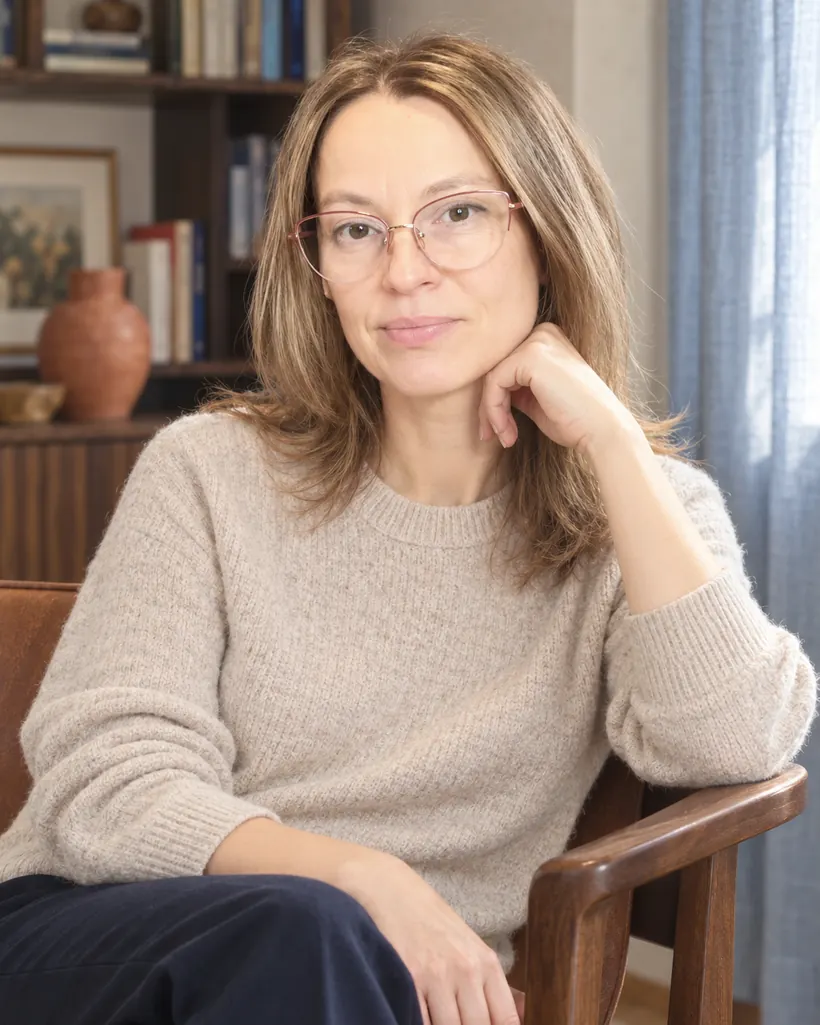
I’m Olha Zabolotna, a speech therapist. I work with children who don’t talk or struggle to understand speech: motor, sensory and sensorimotor alalia, speech delay and delayed psycho-speech development. My goal is not the first words, but fully age-appropriate speech.

Book an assessment

The first assessment is free.

  • Master’s degree in speech therapy
  • Over 7 years of practice
  • V. A. Kovshikov’s language approach
  • Online from any country
Olha Zabolotna, speech therapist
Olha

Does this sound like your child?

Parents often hear “just wait, it will pass” for years. Here are the signs that mean it’s worth booking an assessment as early as possible.

Understands but doesn’t talk

This is often what motor alalia looks like

  • Understands what you say and follows requests
  • At 2.5–3 years and later, has very few words or none at all
  • Points, pulls you by the hand, gets upset when not understood
  • Finds it hard to repeat a word after an adult; words appear and disappear
  • Speech is distorted: skips or swaps syllables, words are hard to recognize
Doesn’t understand what you say

This is often what sensory alalia looks like

  • Hearing is normal, but the child seems not to hear words
  • Repeats other people’s words and phrases (echolalia)
  • “Talks” in intonation, without real words
  • Understands only in familiar situations or only mom

Talks less than peers

This happens with speech delay

  • Speech lags behind the age norm, and the gap isn’t closing
  • Small vocabulary; phrases don’t appear or are very simple
  • You’re told to “wait until five”

Recognize some of these signs? It isn’t a diagnosis yet, but it’s a reason to check speech. The earlier the right work starts, the shorter the path to the norm.

Book an assessment

Autism or sensory alalia?

Children with sensory alalia are often diagnosed with autism (ASD) or suspected of it: the child doesn’t respond to words, repeats other people’s phrases, behaves “in their own way”. But something else may be behind it: the child simply doesn’t understand speech. This changes what therapy should look like.

An ASD diagnosis is made by a doctor; I neither make nor remove it. At the assessment I check speech and understanding to find out whether sensory alalia is behind the difficulties. If it is, it can and should be worked on.

It’s worth checking speech if your child:

  • reaches out to communicate and wants to play with you
  • reads emotions from faces and intonation
  • understands better when you speak slowly, in single words and with gestures
Book an assessment

Steps to the norm

I work according to V. A. Kovshikov’s language approach and follow the developmental (ontogenetic) principle: the child goes through the same stages of speech as their peers, in the same order. We start from the step the child is on now and move step by step to the age norm. In Eastern European speech therapy these steps are known as levels I–IV of general speech underdevelopment.

Choose the step your child is on now

Speech level I

Barely talks, single words

“ma”, “beep-beep”, single words and gestures

What’s happening

Speech is almost absent: babbling, sound imitation, gestures, single words. With motor alalia the child understands what you say but can’t answer. With sensory alalia the child hears well but doesn’t understand words.

What we do

We launch speech. With motor alalia, straight through short phrases with verbs (“give”, “go”, “more”), not through separate names of objects. With sensory alalia, we teach the child to understand words: showing, action and a “quiet mode” at home.

Start from this step

This is a guide, not a diagnosis. I’ll define it precisely at the assessment.

Speech level II

Short phrases, but grammar, pronunciation and the syllable structure of words are severely impaired

“Mama, give appo”

What’s happening

Short phrases of 2–3 words appear, but grammar, pronunciation and the syllable structure of words are severely impaired, and vocabulary is still small. The child understands everyday requests but gets confused by questions like “whose?” or “with what?” and by the words “I” and “you”.

What we do

We build vocabulary quickly through semantic fields, build phrases using grammatical models and teach the child to express wishes in words: “I want a drink”, “I don’t want to”.

Start from this step

This is a guide, not a diagnosis. I’ll define it precisely at the assessment.

Speech level III

Full phrases, but with errors

“Mommy, give me red apple”

What’s happening

Phrases are already full, but there are errors in word endings and prepositions, words are missing, and it’s hard to tell what happened.

What we do

Grammar, connected speech, sounds and the syllable structure of words. The child learns to tell stories, retell and ask questions.

Start from this step

This is a guide, not a diagnosis. I’ll define it precisely at the assessment.

Speech level IV

Almost like peers

“Mommy, can I have that red apple?”

What’s happening

Talks almost like peers, but small difficulties remain: complex words, retelling, words with several meanings, individual sounds.

What we do

We get to the norm and don’t stop halfway. This is exactly where many families quit, and the remaining difficulties resurface at school.

Start from this step

This is a guide, not a diagnosis. I’ll define it precisely at the assessment.

Goal

Age norm

“Mommy, I saw a squirrel hiding nuts!”

What’s happening

The child talks freely, like their peers: tells stories, asks questions, understands complex explanations.

What we do

This is the goal of our work. Not the first words, but fully age-appropriate speech.

Book an assessment

At the assessment I’ll determine which step to start from.

What therapy includes

I choose techniques for the type of alalia. At every step we work on all parts of language: vocabulary, grammar, sounds, phonemic hearing and the syllable structure of words.

Motor alalia

  • Phrases with verbs. I start speech not with names of objects but with actions. This way the child builds a vocabulary as large as their peers’.
  • Semantic fields. We learn words in groups connected by meaning, so they are remembered many times faster.
  • Word and grammar retrieval. The child learns not only to know a word, but to find it quickly while speaking.

Sensory alalia

  • Understanding speech. We teach the child to listen and understand words without gesture prompts.
  • Quiet mode. I show you how to talk at home so the child starts to tell words apart.
  • Moving past echolalia. The child stops repeating other people’s phrases and starts saying their own.
  • Grammar builders and multiple meanings. Understanding more complex phrases and words with several meanings.
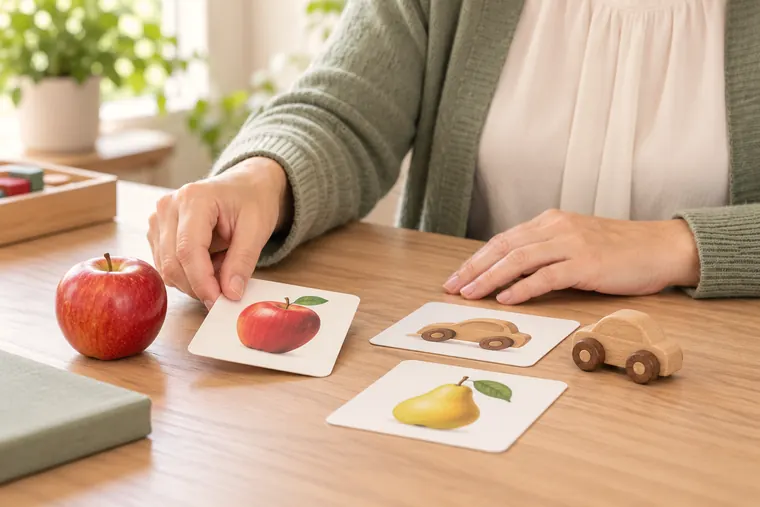
Cards with an apple, a pear and a toy car next to a real apple and a wooden car
A word, a picture and a real object: this is how a child learns what a word means.

How the work goes

  1. Request

    You leave a request on the site or message me. I reply and suggest a time for the assessment.

  2. Free online assessment

    I see how the child understands and uses speech and determine which step to start from.

  3. Plan and parent training

    I explain what we’ll do and in what order, and show you how to set up a language-rich environment at home.

  4. Sessions twice a week

    Online, together with you. Between sessions you practice with your child using my tasks.

  5. Step by step

    I track progress, and we move on until speech reaches the age norm.

Why online works

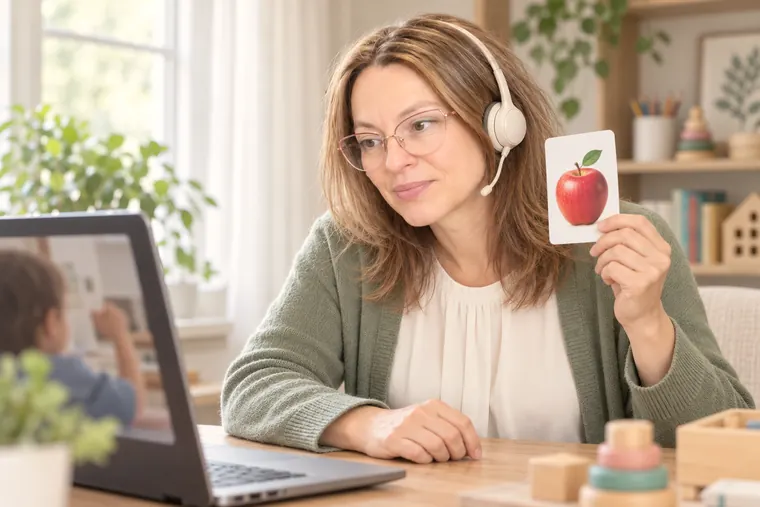
Alalia therapy relies on daily work at home, not just on an hour with a therapist. That’s why I work with your child together with you: you see every technique and reinforce it between sessions. Progress doesn’t wait for the next meeting.

Olha runs an online session: showing a child a card with an apple through a laptop
In the session I show, you are next to your child
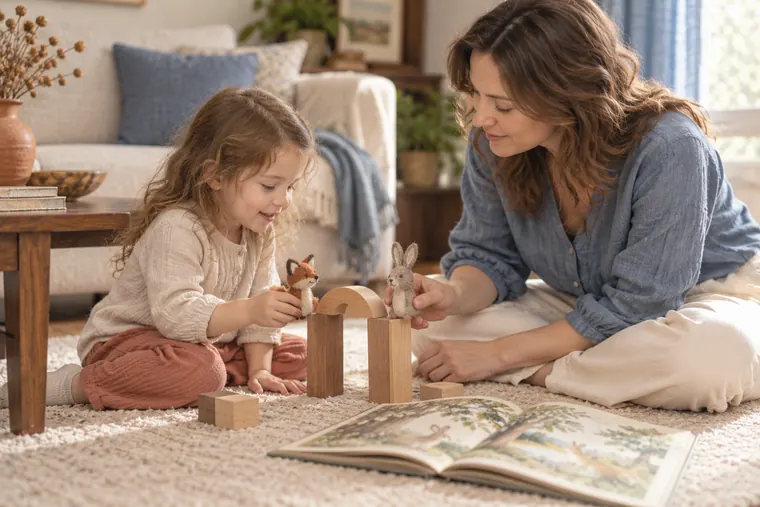
A mother and daughter playing with toy animals on a rug at home
At home you continue every day
  • Familiar surroundings

    No travel and no unfamiliar offices. The child is calmer, and therefore works better.

  • You know what to do next

    Every session ends with a clear task for home.

  • From any country

    I work with families in Ukraine and around the world.

What parents say

I want to thank you for the work you did with Matvii. In the 14 months we worked with you, Matvii made a huge leap in his development: phrases and even sentences appeared. Lately in the evenings he retells the fairy tales you acted out with him in sessions. And he very often asks, “let’s go to Olia”.

Marianna, Matvii’s momtranslated from Ukrainian

Olia, thank you for your professionalism and kind heart in working with my grandson. I’m very glad he was surrounded by your attention in every lesson and that his results are excellent. The thoughtful, patient way you approach every child with an understanding of their needs deserves great respect and gratitude. You explained a lot to me about my own grandson’s behavior, showed me my area of responsibility, supported me and taught me to interact with the child thoughtfully. Thank you so much for your work, your professionalism and your love for children.

Natasha, grandmothertranslated from Russian

I’m very grateful to you, Olha, for the effective sessions with my son Vova. Thanks to your individual approach we’ve seen incredible progress in his development. He loved going to the sessions. Thank you for your professionalism.

Yana, Vova’s momtranslated from Ukrainian
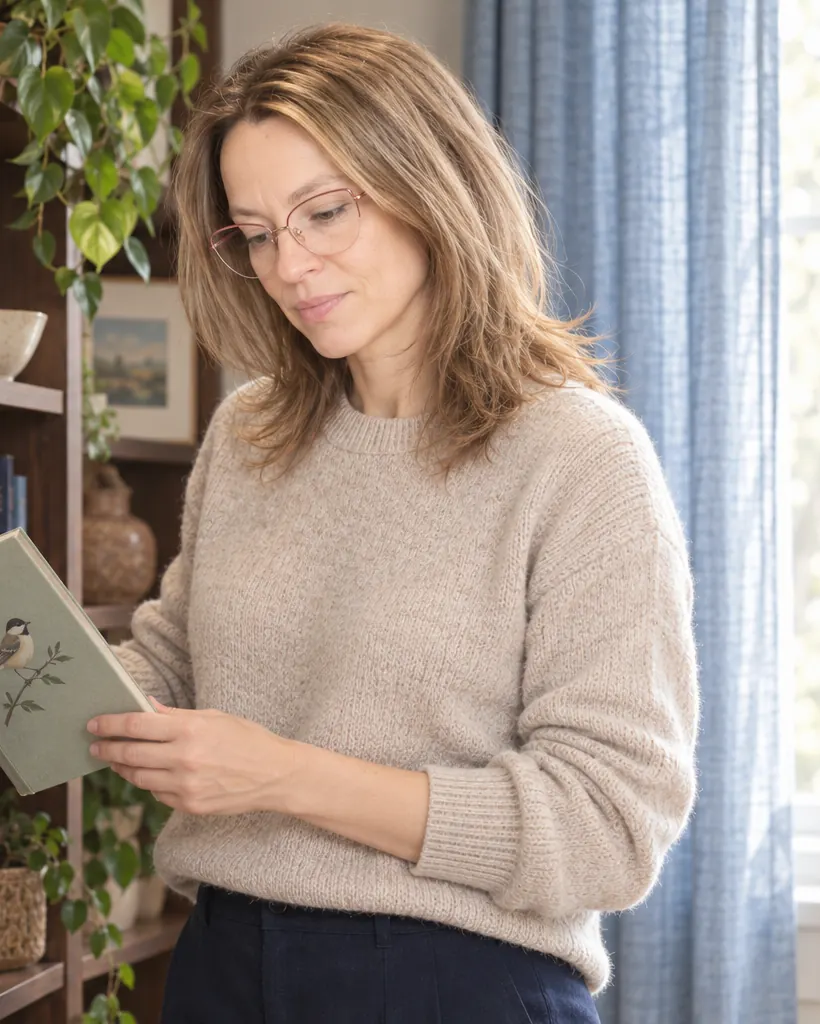
Olha Zabolotna by a bookshelf holding a book

About me

I’m a speech therapist specializing in severe speech disorders: motor, sensory and sensorimotor alalia. I help children move toward the developmental norm, whatever level they are at now.

My work is based on V. A. Kovshikov’s fundamental language approach. I gained hands-on experience applying it from leading specialists during my practice in Montenegro.

“The ultimate goal of my work is a child’s full speech and intellectual norm, not just a few first words”

Education
Master of Special Education, specialization in speech therapy. Mykhailo Drahomanov Ukrainian State University, 2023, Speech Therapy program.
Experience
Over 7 years of practice.
Method
V. A. Kovshikov’s language approach, practice in Montenegro.

Format and terms

Format
Online, by video call
Frequency
Twice a week
Session
60 minutes
Child’s age
From 2.5 years
Where from
Ukraine and any country in the world
First step
Free online assessment
Price
Discussed after the assessment
Book an assessment

Parents’ questions

Didn’t find an answer? or leave a request, and I’ll answer personally.

Maybe we should wait? People say it will pass

Alalia doesn’t go away on its own: it isn’t a delay a child will “outgrow”. The earlier the right therapy starts, the shorter the path to the norm. If you’re not sure, the assessment will show whether work is needed.

At what age can we start?

I work with children from 2.5 years. If your child is younger and something worries you, message me: I’ll suggest what you can do right now.

My child is 5–6. Is it too late?

It’s not too late. Starting earlier is always better, but at 5–6, with the right therapy, children can still reach the age norm. The main thing is not to put it off.

How can a child who doesn’t talk do sessions online?

You are next to your child at every session. I show the techniques, you see how to work, and you reinforce them at home between sessions. With alalia, most progress happens in daily work at home, so the online format works very well.

How long does therapy take?

It depends on which step we start from and how regular the sessions are. With alalia my guideline is about 2–2.5 years to the age norm. I’ll say more precisely after the assessment.

What do parents need to do?

Be present at sessions and practice with your child every day using my tasks. I’ll teach you how to talk with your child at home and what to avoid. Without work at home, progress will be much slower.

Do you guarantee results?

Honestly: no speech therapist can guarantee the norm, because every child is different. I guarantee work based on a method that gives your child the best chances, a clear plan and progress tracking. The goal we work toward is fully age-appropriate speech.

Do you work with children diagnosed with ASD?

Yes, if the difficulties come from impaired understanding of speech: sensory or sensorimotor alalia. At the assessment I check speech specifically. The ASD diagnosis itself is made and removed by a doctor.

How much do sessions cost?

The first assessment is free. We discuss the price of sessions after it, once it’s clear which step we start from and how many sessions are needed.

Book an assessment

Leave a request and I’ll message you in the messenger you prefer. The first assessment is free: we’ll get to know each other and see where to start. It doesn’t commit you to anything.

Or message me directly:

A cozy study with books and a table for sessions

Step 1 of 3

About your child

How old is your child?
How does your child talk now?

Olha Zabolotna’s master’s diploma, Mykhailo Drahomanov Ukrainian State University, 2023